Algorithm 算法
一般算法
查找句子频率出现最高的单词
- 题目
- 答案
const article = "This is a pen, a pencil.";

const findMostWord = (article) => {
  // ...
}

findMostWord(article) // ['a', 2]
const article = "This is a pen, a pencil.";

// 思路
// 用 split() 来将句子中的单词拆分成数组
// 然后用 for 循环遍历数组,使用一个对象来记录每个单词出现的次数
// 最后遍历对象,找出频率最高的单词
const findMostWord = (article) => {
  // 将句子拆分成单词
  const words = article.split(" ");

  // 创建一个对象来记录每个单词出现的次数
  const wordCount = {};

  for (let i = 0; i < words.length; i++) {
    const word = words[i];
    if (wordCount[word]) {
      wordCount[word]++;
    } else {
      wordCount[word] = 1;
    }
  }

  let mostWord;
  let maxCount = 0;
  for (let word in wordCount) {
    if (wordCount[word] > maxCount) {
      maxCount = wordCount[word];
      mostWord = word;
    }
  }

  return [mostWord, maxCount]
}

findMostWord(article)
小孩报数(约瑟夫环)问题
- 题目
- 答案
// 有 30 个小孩,编号从 1 到 30,围成一圈依次报数 1、2、3
// 数到 3 的小孩儿退出这个圈,然后下一个小孩重新报数 1、2、3
// 问最后剩下的那个小孩儿的编号是多少?
// 有 30 个小孩,编号从 1 到 30,围成一圈依次报数 1、2、3
// 数到 3 的小孩儿退出这个圈,然后下一个小孩重新报数 1、2、3
// 问最后剩下的那个小孩儿的编号是多少?

let children = [];
for (let i = 0; i < 30; i++) {
  children[i] = i + 1;
}

let exitCount = 0; // 离开人数
let count = 0; // 记录报数
let index = 0; // 当前下标

while (exitCount < 30 - 1) {
  // 如果当前小孩未退出
  if (children[index] !== 0) {
    count++;
  }

  if (count === 3) {
    // 将退出的小孩在数组中编号标记为 0
    children[index] = 0;
    count = 0;
    exitCount++;
  }
  index++;
  if (index === 30) {
    index = 0
  };
}

const result = children.filter((item) => item !== 0)
console.log(result[0])
【LC】20. 有效的括号
https://leetcode.cn/problems/valid-parentheses/
- 题目
- 答案
输入:s = "()"
输出:true

输入:s = "()[]{}"
输出:true

输入:s = "(]"
输出:false

/**
 * @param {string} s
 * @return {boolean}
 */
var isValid = function (s) {
  // ...
};
输入:s = "()"
输出:true

输入:s = "()[]{}"
输出:true

输入:s = "(]"
输出:false

/**
 * @param {string} s
 * @return {boolean}
 */
var isValid = function (s) {
  if (s.length % 2 !== 0) {
    return false
  }
  const arr = s.split('')
  const stack = []

  for (let i = 0, len = arr.length; i < len; i++) {
    if (['(', '[', '{'].includes(arr[i])) {
      stack.push(arr[i])
    } else {
      const top = stack[stack.length - 1]
      if (
        top === '(' && arr[i] === ')' ||
        top === '[' && arr[i] === ']' ||
        top === '{' && arr[i] === '}'
      ) {
        stack.pop()
      } else {
        return false
      }
    }
  }

  if (stack.length > 0) {
    return false
  }

  return true
};
【LC】76. 最小覆盖子串
https://leetcode.cn/problems/minimum-window-substring/
- 题目
- 答案
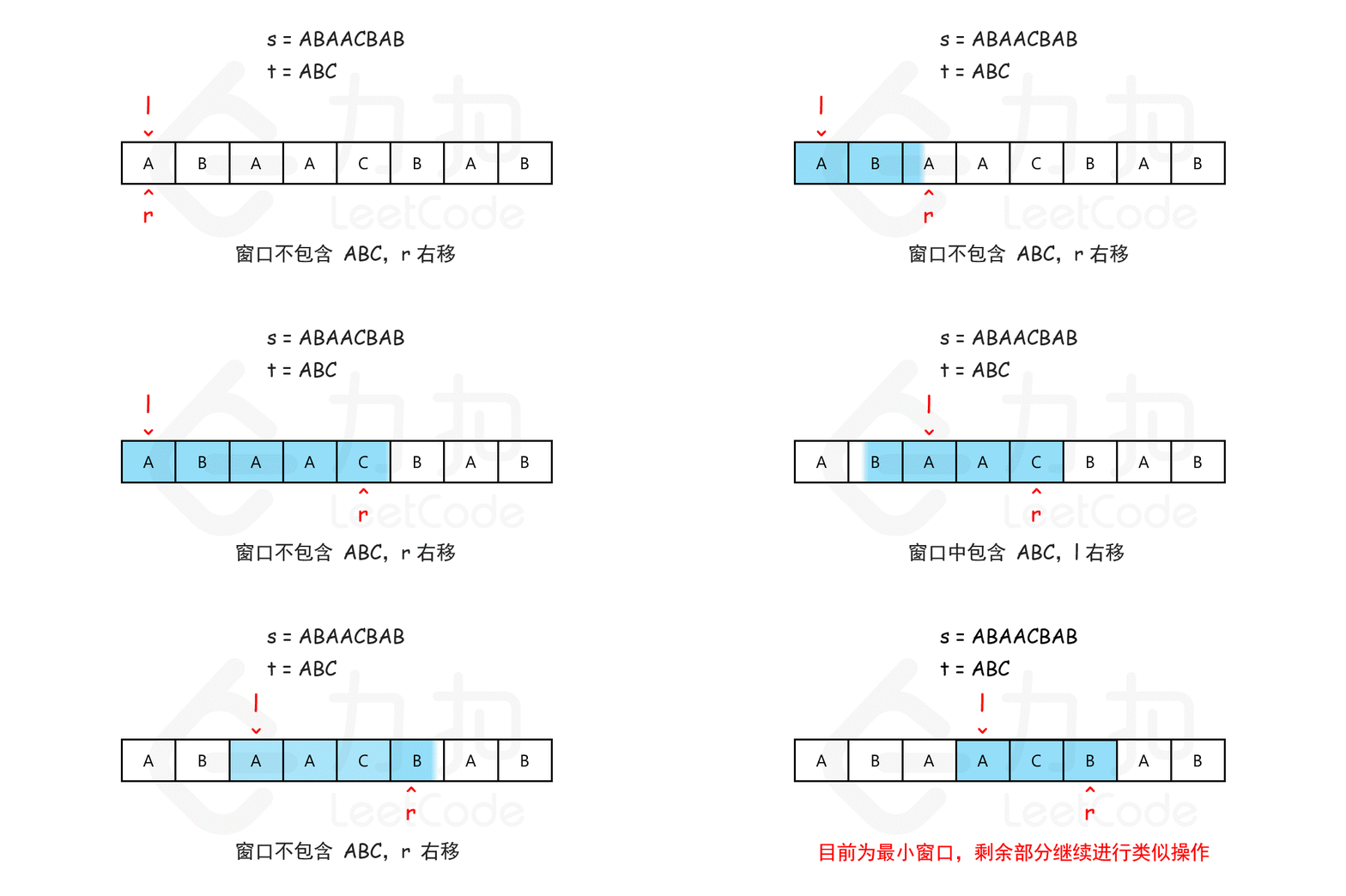
输入:s = "ADOBECODEBANC", t = "ABC"
输出:"BANC"
解释:最小覆盖子串 "BANC" 包含来自字符串 t 的 'A'、'B' 和 'C'。

/**
 * @param {string} s
 * @param {string} t
 * @return {string}
 */
var minWindow = function (s, t) {
  const arr = s.split('')

};
输入:s = "ADOBECODEBANC", t = "ABC"
输出:"BANC"
解释:最小覆盖子串 "BANC" 包含来自字符串 t 的 'A'、'B' 和 'C'。

/**
 * @param {string} s
 * @param {string} t
 * @return {string}
 */
var minWindow = function (s, t) {
  let result = "";
  let l = 0;        // 初始左指针
  let r = 0;        // 初始右指针
  const map = new Map();   // 创建字典表示子串所需的字符及其个数
  for (let i = 0, len = t.length; i < len; i++) {
    const c = t[i];         // 设置字典中所需字符的个数
    map.set(c, map.has(c) ? map.get(c) + 1 : 1);
  }
  let mapType = map.size; // 记录还需要匹配的字符数
  while (r < s.length) {  // 逐个移动右指针
    // 如果是需要匹配的字符,更新字典和还需要的字符数
    const c = s[r];
    if (map.has(c)) {
      map.set(c, map.get(c) - 1);
      if (map.get(c) === 0) mapType -= 1;
    }
    // 当需要匹配的字符已经集齐时,开始逐个移动左指针,尽可能减少子串长度
    while (mapType === 0) {
      // 当新的窗口字符长度小于之前的字符长度时,更新结果
      const newRes = s.slice(l, r + 1);
      if (!result || newRes.length < result.length) result = newRes;
      // 如果是需要匹配的字符,更新字典和还需要的字符数
      const c2 = s[l];
      if (map.has(c2)) {
        map.set(c2, map.get(c2) + 1);
        if (map.get(c2) === 1) mapType += 1;
        // 此时左指针不能再移动了,跳出循环去移动右指针,重新找到所需的字符串
      }
      l++;
    }
    r++;
  }
  return result;
};
【LC】347. 前 K 个高频元素
https://leetcode.cn/problems/top-k-frequent-elements/
- 题目
- 解法1
- 解法2
输入: nums = [1,1,1,2,2,3], k = 2
输出: [1,2]

输入: nums = [1], k = 1
输出: [1]

/**
 * @param {number[]} nums
 * @param {number} k
 * @return {number[]}
 */
var topKFrequent = function (nums, k) {
  // ...
};
输入: nums = [1,1,1,2,2,3], k = 2
输出: [1,2]

输入: nums = [1], k = 1
输出: [1]

/**
 * @param {number[]} nums
 * @param {number} k
 * @return {number[]}
 */
var topKFrequent = function (nums, k) {
  if (nums.length === 1) return nums
  const obj = {}
  nums.forEach(item => {
    if (!obj[item]) {
      obj[item] = 1
    } else {
      obj[item]++
    }
  })
  const arr = []
  for (let key in obj) {
    arr.push({
      key,
      val: obj[key]
    })
  }
  arr.sort((a, b) => b['val'] - a['val'])
  const result = []
  for (let i = 0; i < k; i++) {
    result.push(arr[i].key)
  }
  return result
};
输入: nums = [1,1,1,2,2,3], k = 2
输出: [1,2]

输入: nums = [1], k = 1
输出: [1]

/**
 * @param {number[]} nums
 * @param {number} k
 * @return {number[]}
 */
var topKFrequent = function (nums, k) {
  if (nums.length === 1) return nums
  const obj = {}
  nums.forEach(item => {
    if (!obj[item]) {
      obj[item] = 1
    } else {
      obj[item]++
    }
  })
  const arr = [...new Set(nums)]
  arr.sort((a, b) => obj[b] - obj[a])
  return arr.slice(0, k)
};
链表系列
【LC】237. 删除链表中的节点
https://leetcode.cn/problems/delete-node-in-a-linked-list/
- 题目
- 答案
输入:head = [4,5,1,9], node = 5
输出:[4,1,9]
解释:指定删除节点 5,调用后链表应变为 4 -> 1 -> 9

/**
 * Definition for singly-linked list.
 * function ListNode(val) {
 *     this.val = val;
 *     this.next = null;
 * }
 */
/**
 * @param {ListNode} node
 * @return {void} Do not return anything, modify node in-place instead.
 */
var deleteNode = function (node) {
  // ...
};
输入:head = [4,5,1,9], node = 5
输出:[4,1,9]
解释:指定删除节点 5,调用后链表应变为 4 -> 1 -> 9

/**
 * Definition for singly-linked list.
 * function ListNode(val) {
 *     this.val = val;
 *     this.next = null;
 * }
 */
/**
 * @param {ListNode} node
 * @return {void} Do not return anything, modify node in-place instead.
 */
var deleteNode = function (node) {
  node.val = node.next.val
  node.next = node.next.next
};
【LC】206. 反转链表
https://leetcode.cn/problems/reverse-linked-list/
- 题目
- 答案
输入:head = [1,2,3,4,5]
输出:[5,4,3,2,1]

输入:head = []
输出:[]

/**
 * Definition for singly-linked list.
 * function ListNode(val, next) {
 *     this.val = (val===undefined ? 0 : val)
 *     this.next = (next===undefined ? null : next)
 * }
 */
/**
 * @param {ListNode} head
 * @return {ListNode}
 */
var reverseList = function (head) {
  // ...
};
输入:head = [1,2,3,4,5]
输出:[5,4,3,2,1]

输入:head = []
输出:[]

/**
 * Definition for singly-linked list.
 * function ListNode(val, next) {
 *     this.val = (val===undefined ? 0 : val)
 *     this.next = (next===undefined ? null : next)
 * }
 */
/**
 * @param {ListNode} head
 * @return {ListNode}
 */
var reverseList = function (head) {
  let p1 = head
  let p2 = null

  while (p1) {
    const temp = p1.next
    p1.next = p2
    p2 = p1
    p1 = temp
  }

  return p2
};
【LC】2. 两数相加
https://leetcode.cn/problems/add-two-numbers/
- 题目
- 答案
输入:l1 = [2,4,3], l2 = [5,6,4]
输出:[7,0,8]
解释:342 + 465 = 807

/**
 * Definition for singly-linked list.
 * function ListNode(val, next) {
 *     this.val = (val===undefined ? 0 : val)
 *     this.next = (next===undefined ? null : next)
 * }
 */
/**
 * @param {ListNode} l1
 * @param {ListNode} l2
 * @return {ListNode}
 */
var addTwoNumbers = function (l1, l2) {
  // ...
};
输入:l1 = [2,4,3], l2 = [5,6,4]
输出:[7,0,8]
解释:342 + 465 = 807

/**
 * Definition for singly-linked list.
 * function ListNode(val, next) {
 *     this.val = (val===undefined ? 0 : val)
 *     this.next = (next===undefined ? null : next)
 * }
 */
/**
 * @param {ListNode} l1
 * @param {ListNode} l2
 * @return {ListNode}
 */
var addTwoNumbers = function (l1, l2) {
  const l3 = new ListNode(0)
  let p1 = l1
  let p2 = l2
  let p3 = l3
  let carry = 0

  while (p1 || p2) {
    const val1 = p1 ? p1.val : 0
    const val2 = p2 ? p2.val : 0
    const sum = val1 + val2 + carry
    carry = Math.floor(sum / 10)
    p3.next = new ListNode(sum % 10)
    if (p1) {
      p1 = p1.next
    }
    if (p2) {
      p2 = p2.next
    }
    p3 = p3.next
  }

  if (carry) {
    p3.next = new ListNode(carry)
  }

  return l3.next
};
【LC】83. 删除排序链表中的重复元素
https://leetcode.cn/problems/remove-duplicates-from-sorted-list/
- 题目
- 答案
输入:head = [1,1,2,3,3]
输出:[1,2,3]

/**
 * Definition for singly-linked list.
 * function ListNode(val, next) {
 *     this.val = (val===undefined ? 0 : val)
 *     this.next = (next===undefined ? null : next)
 * }
 */
/**
 * @param {ListNode} head
 * @return {ListNode}
 */
var deleteDuplicates = function (head) {
  // ...
};
输入:head = [1,1,2,3,3]
输出:[1,2,3]

/**
 * Definition for singly-linked list.
 * function ListNode(val, next) {
 *     this.val = (val===undefined ? 0 : val)
 *     this.next = (next===undefined ? null : next)
 * }
 */
/**
 * @param {ListNode} head
 * @return {ListNode}
 */
var deleteDuplicates = function (head) {
  let p = head
  while (p) {
    if (p.val === p.next?.val) {
      p.next = p.next.next
    } else {
      p = p.next
    }
  }
  return head
};
【LC】141. 环形链表
https://leetcode.cn/problems/linked-list-cycle/
- 题目
- 答案
输入:head = [3,2,0,-4], pos = 1
输出:true
解释:链表中有一个环,其尾部连接到第二个节点。

输入:head = [1], pos = -1
输出:false
解释:链表中没有环。

/**
 * Definition for singly-linked list.
 * function ListNode(val) {
 *     this.val = val;
 *     this.next = null;
 * }
 */

/**
 * @param {ListNode} head
 * @return {boolean}
 */
var hasCycle = function (head) {
  // ...
};
输入:head = [3,2,0,-4], pos = 1
输出:true
解释:链表中有一个环,其尾部连接到第二个节点。

输入:head = [1], pos = -1
输出:false
解释:链表中没有环。

/**
 * Definition for singly-linked list.
 * function ListNode(val) {
 *     this.val = val;
 *     this.next = null;
 * }
 */

/**
 * @param {ListNode} head
 * @return {boolean}
 */
var hasCycle = function (head) {
  let p1 = head
  let p2 = head
  while (p1 && p2) {
    p1 = p1.next
    p2 = p2.next?.next
    if (p1 === p2) {
      return true
    }
  }
  return false
};
【LC】21. 合并两个有序链表
https://leetcode.cn/problems/merge-two-sorted-lists/
- 题目
- 答案
输入:l1 = [1,2,4], l2 = [1,3,4]
输出:[1,1,2,3,4,4]

/**
 * Definition for singly-linked list.
 * function ListNode(val, next) {
 *     this.val = (val===undefined ? 0 : val)
 *     this.next = (next===undefined ? null : next)
 * }
 */
/**
 * @param {ListNode} list1
 * @param {ListNode} list2
 * @return {ListNode}
 */
var mergeTwoLists = function (list1, list2) {
  // ...
};
输入:l1 = [1,2,4], l2 = [1,3,4]
输出:[1,1,2,3,4,4]

/**
 * Definition for singly-linked list.
 * function ListNode(val, next) {
 *     this.val = (val===undefined ? 0 : val)
 *     this.next = (next===undefined ? null : next)
 * }
 */
/**
 * @param {ListNode} list1
 * @param {ListNode} list2
 * @return {ListNode}
 */
var mergeTwoLists = function (list1, list2) {
  const head = new ListNode()
  let p = head
  while (list1 && list2) {
    if (list1.val < list2.val) {
      p.next = list1
      list1 = list1.next
    } else {
      p.next = list2
      list2 = list2.next
    }
    p = p.next
  }
  if (list1) p.next = list1
  if (list2) p.next = list2
  return head.next
};
【LC】23. 合并 K 个升序链表
https://leetcode.cn/problems/merge-k-sorted-lists/
- 题目
- 解法1
- 解法2
输入:lists = [[1,4,5],[1,3,4],[2,6]]
输出:[1,1,2,3,4,4,5,6]
解释:链表数组如下:
[
  1->4->5,
  1->3->4,
  2->6
]
将它们合并到一个有序链表中得到。
1->1->2->3->4->4->5->6

/**
 * Definition for singly-linked list.
 * function ListNode(val, next) {
 *     this.val = (val===undefined ? 0 : val)
 *     this.next = (next===undefined ? null : next)
 * }
 */
/**
 * @param {ListNode[]} lists
 * @return {ListNode}
 */
var mergeKLists = function (lists) {
  // ...
};
输入:lists = [[1,4,5],[1,3,4],[2,6]]
输出:[1,1,2,3,4,4,5,6]
解释:链表数组如下:
[
  1->4->5,
  1->3->4,
  2->6
]
将它们合并到一个有序链表中得到。
1->1->2->3->4->4->5->6

/**
 * Definition for singly-linked list.
 * function ListNode(val, next) {
 *     this.val = (val===undefined ? 0 : val)
 *     this.next = (next===undefined ? null : next)
 * }
 */
/**
 * @param {ListNode[]} lists
 * @return {ListNode}
 */
var mergeKLists = function (lists) {
  const len = lists.length
  if (len === 0) return null
  const merge = (l1, l2) => { // 两两合并
    const head = new ListNode()
    let p = head
    while (l1 && l2) {
      if (l1.val <= l2.val) {
        p.next = l1
        l1 = l1.next
      } else {
        p.next = l2
        l2 = l2.next
      }
      p = p.next
    }
    p.next = l1 ? l1 : l2
    return head.next
  }
  let result = lists[0]
  for (let i = 1; i < len; i++) {
    if (lists[i]) {
      result = merge(result, lists[i])
    }
  }
  return result
};
输入:lists = [[1,4,5],[1,3,4],[2,6]]
输出:[1,1,2,3,4,4,5,6]
解释:链表数组如下:
[
  1->4->5,
  1->3->4,
  2->6
]
将它们合并到一个有序链表中得到。
1->1->2->3->4->4->5->6

/**
 * Definition for singly-linked list.
 * function ListNode(val, next) {
 *     this.val = (val===undefined ? 0 : val)
 *     this.next = (next===undefined ? null : next)
 * }
 */
/**
 * @param {ListNode[]} lists
 * @return {ListNode}
 */
var mergeKLists = function (lists) {
  const arr = []
  lists.forEach(item => {
    let p = item
    while (p) {
      arr.push(p.val)
      p = p.next
    }
  })
  arr.sort((a, b) => a - b)
  const result = new ListNode()
  let p = result
  arr.forEach(item => {
    p.next = new ListNode(item)
    p = p.next
  })
  return result.next
};
二叉树系列
DFS 和 BFS 的区别,手写 DFS 和 BFS
深度优先(DFS)沿着一条分支走到头再回溯,常用递归或栈;广度优先(BFS)按层从近到远访问,常用队列。二叉树的前/中/后序是 DFS,层序是 BFS。
const dfs = (root) => {
  if (!root) return
  console.log(root.val)
  root.children && root.children.forEach(dfs)
}

const bfs = (root) => {
  const queue = []
  if (root) queue.push(root)
  while (queue.length) {
    const curNode = queue.shift()
    console.log(curNode.val)
    curNode.children && curNode.children.forEach((child) => {
      queue.push(child)
    })
  }
}
二叉树前 / 中 / 后 / 层序遍历结果

- 题目
- 答案
上面二叉树先/中/后/层序遍历的结果为?
前序遍历(中左右)

5 4 1 2 6 7 8


中序遍历(左中右)

1 4 2 5 7 6 8


后序遍历(左右中)

1 2 4 7 8 6 5


层序遍历(广度优先遍历)

[[5],[4,6],[1,2,7,8]]
【LC】144. 二叉树的前序遍历(两种解法)
https://leetcode.cn/problems/binary-tree-preorder-traversal/
- 题目
- 递归解法
- 非递归解法
/**
 * Definition for a binary tree node.
 * function TreeNode(val, left, right) {
 *   this.val = (val===undefined ? 0 : val)
 *   this.left = (left===undefined ? null : left)
 *   this.right = (right===undefined ? null : right)
 * }
 */

/**
 * @param {TreeNode} root
 * @return {number[]}
 */
const preorderTraversal = (root) => {
  // ...
};
/**
 * Definition for a binary tree node.
 * function TreeNode(val, left, right) {
 *   this.val = (val===undefined ? 0 : val)
 *   this.left = (left===undefined ? null : left)
 *   this.right = (right===undefined ? null : right)
 * }
 */

/**
 * @param {TreeNode} root
 * @return {number[]}
 */
const preorderTraversal = (root) => {
  let result = []
  const preorder = (node) => {
    if (!node) return
    // 先根节点
    result.push(node.val)
    // 然后遍历左子树
    preorder(node.left)
    // 再遍历右子树
    preorder(node.right)
  }
  preorder(root)
  return result
};
/**
 * Definition for a binary tree node.
 * function TreeNode(val, left, right) {
 *   this.val = (val===undefined ? 0 : val)
 *   this.left = (left===undefined ? null : left)
 *   this.right = (right===undefined ? null : right)
 * }
 */

/**
 * @param {TreeNode} root
 * @return {number[]}
 */
// 前序遍历
const preorderTraversal = (root) => {
  const result = [];
  const stack = [];

  // 当根节点不为空的时候,将根节点入栈
  if (root) stack.push(root)
  while (stack.length) {
    const curNode = stack.pop()
    // 第一步的时候,先访问的是根节点
    result.push(curNode.val)

    // 我们先打印左子树,然后右子树
    // 所以先加入栈的是右子树,然后左子树
    curNode.right && stack.push(curNode.right)
    curNode.left && stack.push(curNode.left)
  }
  return result
}
【LC】94. 二叉树的中序遍历(两种解法)
https://leetcode.cn/problems/binary-tree-inorder-traversal/
- 题目
- 递归解法
- 非递归解法
/**
 * Definition for a binary tree node.
 * function TreeNode(val, left, right) {
 *   this.val = (val===undefined ? 0 : val)
 *   this.left = (left===undefined ? null : left)
 *   this.right = (right===undefined ? null : right)
 * }
 */

/**
 * @param {TreeNode} root
 * @return {number[]}
 */
const inorderTraversal = function (root) {
  // ...
};
/**
 * Definition for a binary tree node.
 * function TreeNode(val, left, right) {
 *   this.val = (val===undefined ? 0 : val)
 *   this.left = (left===undefined ? null : left)
 *   this.right = (right===undefined ? null : right)
 * }
 */

/**
 * @param {TreeNode} root
 * @return {number[]}
 */
const inorderTraversal = function (root) {
  const result = []
  const inorder = node => {
    if (!node) return
    inorder(node.left)
    result.push(node.val)
    inorder(node.right)
  }
  inorder(root)
  return result
};
/**
 * Definition for a binary tree node.
 * function TreeNode(val, left, right) {
 *   this.val = (val===undefined ? 0 : val)
 *   this.left = (left===undefined ? null : left)
 *   this.right = (right===undefined ? null : right)
 * }
 */

/**
 * @param {TreeNode} root
 * @return {number[]}
 */
const inorderTraversal = function (root) {
  const result = [];
  const stack = [];

  while (root) {        // 能压栈的左子节点都压进来
    stack.push(root);
    root = root.left;
  }
  while (stack.length) {
    let curNode = stack.pop();  // 栈顶的节点出栈
    result.push(curNode.val);   // 在压入右子树之前,处理它的数值部分(因为中序遍历)
    curNode = curNode.right;    // 获取它的右子树
    while (curNode) {           // 右子树存在,执行 while 循环
      stack.push(curNode);      // 压入当前 root
      curNode = curNode.left;   // 不断压入左子节点
    }
  }
  return result;
};
【LC】145. 二叉树的后序遍历(两种解法)
https://leetcode.cn/problems/binary-tree-postorder-traversal/
- 题目
- 递归解法
- 非递归解法
/**
 * Definition for a binary tree node.
 * function TreeNode(val, left, right) {
 *   this.val = (val===undefined ? 0 : val)
 *   this.left = (left===undefined ? null : left)
 *   this.right = (right===undefined ? null : right)
 * }
 */

/**
 * @param {TreeNode} root
 * @return {number[]}
 */
const postorderTraversal = function (root) {
  // ...
};
/**
 * Definition for a binary tree node.
 * function TreeNode(val, left, right) {
 *   this.val = (val===undefined ? 0 : val)
 *   this.left = (left===undefined ? null : left)
 *   this.right = (right===undefined ? null : right)
 * }
 */

/**
 * @param {TreeNode} root
 * @return {number[]}
 */
const postorderTraversal = function (root) {
  const result = []
  const postorder = node => {
    if (!node) return
    postorder(node.left)
    postorder(node.right)
    result.push(node.val)
  }
  postorder(root)
  return result
};
/**
 * Definition for a binary tree node.
 * function TreeNode(val, left, right) {
 *   this.val = (val===undefined ? 0 : val)
 *   this.left = (left===undefined ? null : left)
 *   this.right = (right===undefined ? null : right)
 * }
 */

/**
 * @param {TreeNode} root
 * @return {number[]}
 */
const postorderTraversal = function (root) {
  const result = [];
  const stack = [];

  // 当根节点不为空的时候,将根节点入栈
  if (root) stack.push(root)
  while (stack.length) {
    const curNode = stack.pop()
    // 中左右 => 右左中
    result.unshift(curNode.val)

    // 先进栈左子树后右子树
    // 出栈的顺序就变更为先右后左
    curNode.left && stack.push(curNode.left)
    curNode.right && stack.push(curNode.right)
  }
  return result
}
【LC】102. 二叉树的层序遍历
https://leetcode.cn/problems/binary-tree-level-order-traversal/
- 题目
- 答案
    3
   / \
  9  20
    /  \
   15   7

输入:root = [3, 9, 20, null, null, 15, 7]
输出:[[3], [9, 20], [15, 7]]

/**
 * Definition for a binary tree node.
 * function TreeNode(val, left, right) {
 *     this.val = (val===undefined ? 0 : val)
 *     this.left = (left===undefined ? null : left)
 *     this.right = (right===undefined ? null : right)
 * }
 */
/**
 * @param {TreeNode} root
 * @return {number[][]}
 */
const levelOrder = function (root) {
  // ...
};
    3
   / \
  9  20
    /  \
   15   7

输入:root = [3, 9, 20, null, null, 15, 7]
输出:[[3], [9, 20], [15, 7]]

/**
 * Definition for a binary tree node.
 * function TreeNode(val, left, right) {
 *     this.val = (val===undefined ? 0 : val)
 *     this.left = (left===undefined ? null : left)
 *     this.right = (right===undefined ? null : right)
 * }
 */
/**
 * @param {TreeNode} root
 * @return {number[][]}
 */
const levelOrder = function (root) {
  const result = [];
  const queue = [];
  if (root) queue.push(root);
  while (queue.length) {
    const len = queue.length; // 记录当前层级节点数
    const curArr = [];        // 存放每一层的节点
    for (let i = 0; i < len; i++) {
      const curNode = queue.shift();
      curArr.push(curNode.val);
      // 存放当前层下一层的节点
      curNode.left && queue.push(curNode.left);
      curNode.right && queue.push(curNode.right);
    }
    result.push(curArr);      // 把每一层的结果放到结果数组
  }
  return result;
};
【LC】104. 二叉树的最大深度
https://leetcode.cn/problems/maximum-depth-of-binary-tree/
- 题目
- DFS 解法
- BFS 解法
    3
   / \
  9  20
    /  \
   15   7

输入:root = [3, 9, 20, null, null, 15, 7]
输出:3

/**
 * Definition for a binary tree node.
 * function TreeNode(val, left, right) {
 *     this.val = (val===undefined ? 0 : val)
 *     this.left = (left===undefined ? null : left)
 *     this.right = (right===undefined ? null : right)
 * }
 */
/**
 * @param {TreeNode} root
 * @return {number}
 */
var maxDepth = function (root) {
  // ...
};
    3
   / \
  9  20
    /  \
   15   7

输入:root = [3, 9, 20, null, null, 15, 7]
输出:3

/**
 * Definition for a binary tree node.
 * function TreeNode(val, left, right) {
 *     this.val = (val===undefined ? 0 : val)
 *     this.left = (left===undefined ? null : left)
 *     this.right = (right===undefined ? null : right)
 * }
 */
/**
 * @param {TreeNode} root
 * @return {number}
 */
var maxDepth = function (root) {
  if (!root) return 0
  return Math.max(maxDepth(root.left), maxDepth(root.right)) + 1
};
    3
   / \
  9  20
    /  \
   15   7

输入:root = [3, 9, 20, null, null, 15, 7]
输出:3

/**
 * Definition for a binary tree node.
 * function TreeNode(val, left, right) {
 *     this.val = (val===undefined ? 0 : val)
 *     this.left = (left===undefined ? null : left)
 *     this.right = (right===undefined ? null : right)
 * }
 */
/**
 * @param {TreeNode} root
 * @return {number}
 */
var maxDepth = function (root) {
  let result = 0;
  const queue = [];
  if (root) queue.push(root);
  while (queue.length) {
    const len = queue.length;
    for (let i = 0; i < len; i++) {
      const curNode = queue.shift();
      curNode.left && queue.push(curNode.left);
      curNode.right && queue.push(curNode.right);
    }
    result += 1;
  }
  return result;
};
【LC】111. 二叉树的最小深度
https://leetcode.cn/problems/minimum-depth-of-binary-tree/
最小深度是从根节点到最近叶子节点(没有子节点的节点)的最短路径上的节点数。
- 题目
- DFS 解法
- BFS 解法
    3
   / \
  9  20
    /  \
   15   7

输入:root = [3, 9, 20, null, null, 15, 7]
输出:2

/**
 * Definition for a binary tree node.
 * function TreeNode(val, left, right) {
 *     this.val = (val===undefined ? 0 : val)
 *     this.left = (left===undefined ? null : left)
 *     this.right = (right===undefined ? null : right)
 * }
 */
/**
 * @param {TreeNode} root
 * @return {number}
 */
var minDepth = function (root) {
  // ...
};
    3
   / \
  9  20
    /  \
   15   7

输入:root = [3, 9, 20, null, null, 15, 7]
输出:2

/**
 * Definition for a binary tree node.
 * function TreeNode(val, left, right) {
 *     this.val = (val===undefined ? 0 : val)
 *     this.left = (left===undefined ? null : left)
 *     this.right = (right===undefined ? null : right)
 * }
 */
/**
 * @param {TreeNode} root
 * @return {number}
 */
var minDepth = function (root) {
  if (!root) return 0;
  if (root.left && root.right) {
    return Math.min(minDepth(root.left), minDepth(root.right)) + 1;
  }
  if (root.left) {
    return minDepth(root.left) + 1;
  }
  if (root.right) {
    return minDepth(root.right) + 1;
  }
  return 1;
};
    3
   / \
  9  20
    /  \
   15   7

输入:root = [3, 9, 20, null, null, 15, 7]
输出:2

/**
 * Definition for a binary tree node.
 * function TreeNode(val, left, right) {
 *     this.val = (val===undefined ? 0 : val)
 *     this.left = (left===undefined ? null : left)
 *     this.right = (right===undefined ? null : right)
 * }
 */
/**
 * @param {TreeNode} root
 * @return {number}
 */
var minDepth = function (root) {
  let result = 0;
  const queue = [];
  if (root) queue.push(root);
  while (queue.length) {
    const len = queue.length;
    for (let i = 0; i < len; i++) {
      const curNode = queue.shift();
      if (!curNode.left && !curNode.right) {
        return result + 1;  // 如果是叶子节点,直接返回所在层数
      }
      curNode.left && queue.push(curNode.left);
      curNode.right && queue.push(curNode.right);
    }
    result += 1; // 进入下一层
  }
  return result
};
【LC】112. 路径总和
https://leetcode.cn/problems/path-sum/
- 题目
- 答案
      5
     / \
    4   8
   /   / \
  11  13  4
 / \       \
7   2       1

输入:root = [5,4,8,11,null,13,4,7,2,null,null,null,1], targetSum = 22
输出:true

/**
 * Definition for a binary tree node.
 * function TreeNode(val, left, right) {
 *     this.val = (val===undefined ? 0 : val)
 *     this.left = (left===undefined ? null : left)
 *     this.right = (right===undefined ? null : right)
 * }
 */
/**
 * @param {TreeNode} root
 * @param {number} targetSum
 * @return {boolean}
 */
var hasPathSum = function (root, targetSum) {
  // ...
};
      5
     / \
    4   8
   /   / \
  11  13  4
 / \       \
7   2       1

输入:root = [5,4,8,11,null,13,4,7,2,null,null,null,1], targetSum = 22
输出:true

/**
 * Definition for a binary tree node.
 * function TreeNode(val, left, right) {
 *     this.val = (val===undefined ? 0 : val)
 *     this.left = (left===undefined ? null : left)
 *     this.right = (right===undefined ? null : right)
 * }
 */
/**
 * @param {TreeNode} root
 * @param {number} targetSum
 * @return {boolean}
 */
var hasPathSum = function (root, targetSum) {
  if (!root) return false
  let result = false
  const dfs = (node, sum) => {
    if (!node.left && !node.right && sum === targetSum) {
      result = true
    }
    node.left && dfs(node.left, sum + node.left.val)
    node.right && dfs(node.right, sum + node.right.val)
  }
  dfs(root, root.val)
  return result
};
计算二叉树的深度
某公司组织架构以二叉树形式记录,请返回该公司的层级数(即二叉树的最大深度,定义为根节点到最远叶子节点的最长路径上的节点数)。
   1
  2 2
 3   5
4     4
输出示例:
- 输入:
root = [1,2,2,3,null,null,5,4,null,null,4](二叉树的数组表示,遵循层序遍历规则,null代表空节点) - 输出:
4 - 解释:最长路径为
1→2→3→4或1→2→5→4,路径包含 4 个节点,因此层级数为 4。
解法:
/**
 * Definition for a binary tree node.
 * function TreeNode(val, left, right) {
 *     this.val = (val===undefined ? 0 : val)
 *     this.left = (left===undefined ? null : left)
 *     this.right = (right===undefined ? null : right)
 * }
 */
/**
 * @param {TreeNode} root
 * @return {number}
 */
var maxDepth = function(root) {
    // 空节点的深度为 0
    if (root === null) {
        return 0;
    }
    // 递归计算左子树的深度
    const leftDepth = maxDepth(root.left);
    // 递归计算右子树的深度
    const rightDepth = maxDepth(root.right);
    // 当前节点的深度 = 左右子树深度的最大值 + 1(自身)
    return Math.max(leftDepth, rightDepth) + 1;
};